

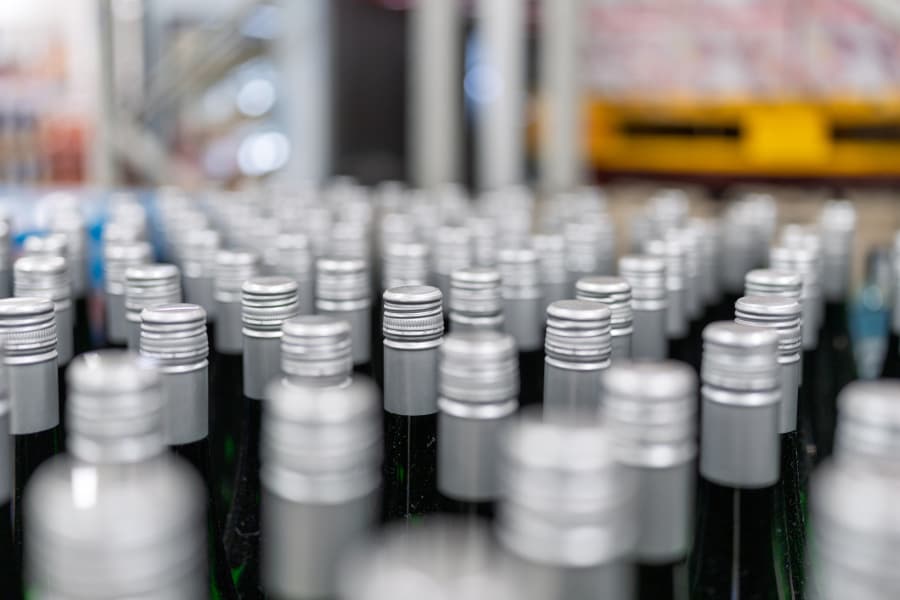
The closure is the last piece you add to your bottle and the first thing your customer touches. When it fits, it locks in everything you worked to create. When it doesn’t, you risk leaks and spoiled product.
Since 1980, Waterloo Container Company has helped wineries, distilleries, and craft producers top off their packages. As a family-owned glass packaging source in the Finger Lakes, we stock bottles along with the closures made to fit them for producers throughout the eastern states. In this guide, we discuss how to choose a bottle closure, so you can pair the two with confidence.
Key Takeaways
- A closure must match the bottle’s finish, which is the shaped glass at the top of the neck that receives the cork or cap.
- Cork-finish bottles take natural or synthetic corks, while screw-cap bottles need a cap sized to their specific thread finish.
- Bar-top closures are a popular choice for spirits and require a bottle with a matching bar-top finish.
- A mismatched closure can leak or let in oxygen, which shortens shelf life and hurts product quality.
- Waterloo Container Company can help you choose the right cap or closure for your bottle.
Why Is Bottle and Bottle Closure Compatibility Important?
A closure has two jobs: it has to protect what’s inside, and it must look good doing it. The closure and bottle finish work together to form the seal. If a cork is too small or a cap doesn’t fit the bottle’s finish correctly, the closure may fail to create a proper seal, allowing oxygen to enter or liquid to leak and affecting product quality.
Additionally, a crooked cap or wrinkled capsule looks messy on the shelf. Having a closure that fits correctly makes your package feel finished. If it opens and reseals easily, that experience continues when your customers open the bottle.
What Are the Common Types of Bottle Closures?
Most closures fall into a few categories, and each one pairs with a specific bottle finish.
- Corks: Cork-finish bottles have a smooth, straight bore that accepts natural or synthetic corks. Many producers add a PVC capsule or poly-laminate capsule over the top for a polished look.
- Screw caps and threaded closures: Screw caps open and reclose easily. STELVIN® caps are a go-to for wine, and they fit bottles with a matching screw-cap finish. Roll-on-pilfer-proof (ROPP) caps form their threads during application, so they require machine capping, which suits spirits and specialty products.
- Bar-top and specialty closures: Bar tops pair a cork or synthetic shank with a decorative head. They give spirits a premium feel and reseal by hand. Specialty options include crown caps for beer and cider, hinged swing tops, sparkling stoppers with wires, and sealing wax.
If your beverage is carbonated, you need a suitable pressure-rated bottle and compatible closure. You should select the closure for the application and not the appearance alone.
The Role of Bottle Finish in Closure Choice
A bottle’s shape doesn’t tell you how a closure will fit, but the finish does. For example, two 750 mL Bordeaux bottles can look identical yet have different finishes. One could be built for a cork and the other for a screw cap.
Before ordering, check the bottle’s spec sheet for finish type and size. If your bottle has a cork finish, you should note the inside bore diameter as well.
Most bottle closure compatibility problems are caused by a few common missteps:
- Ordering closures by bottle style instead of finish specs
- Switching bottle supplies or styles without rechecking closure fit
- Skipping a test run on your own capping or corking equipment
Luckily, the fix is simple. First confirm the finish, then match the closure to it.
Find the Perfect Bottle Closure Fit with Waterloo Container Company
Are you ready to top off your bottles? Waterloo Container Company can help. Browse our full selection of corks, caps, and closures and contact our customer service team to confirm the right fit for your bottle. Find what you need at Waterloo Container Company, The Glass Packaging Source.
Frequently Asked Questions About Bottle Caps & Closures
Why is bottle and closure compatibility important?
A compatible closure helps maintain the seal and prevent leakage. It also supports consistent packaging performance throughout storage and customer use.
Which closures work best with cork-finish, screw-cap, and bar-top bottles?
Cork-finish bottles take natural or synthetic corks. Screw-cap bottles need a cap matched to their thread finish, like a STELVIN® cap. Bar-top bottles pair with bar tops sized to their opening.
What problems can result from using an incompatible bottle closure?
An incompatible closure may leak or fail to seal securely. It can also create application problems that interrupt bottling.
How should producers confirm bottle finish specifications before ordering closures?
Review the bottle’s spec sheet for finish details. Our customer service representatives can also confirm compatible closures for any bottle we carry.
What questions should I ask when choosing a bottle closure?
Asking a few quick questions can help prevent costly surprises on bottling day:
- Does the closure match the bottle’s documented finish?
- Is the closure material or liner suitable for my product?
- Can my equipment apply this closure correctly?
- Does the package need pressure resistance or tamper evidence?
- How should we evaluate samples before placing a production order?
Can I put a screw cap on a bottle made for a cork?
No. A cork-finish bottle has a smooth neck with no threads, so a screw cap has nothing to grip. If you want to switch to screw caps, choose a bottle with a screw-cap finish, and our team can help you find a similar style.