

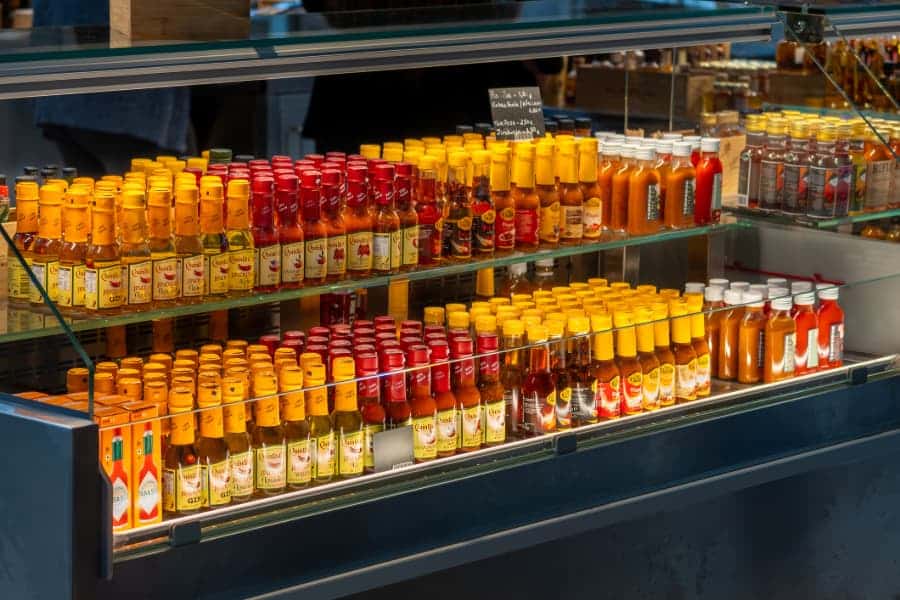
Your recipe took time to perfect, and your packaging should do it justice. The right bottle protects your product and gives shoppers a reason to pick it up.
Waterloo Container Company is a family-owned glass packaging source based in the Finger Lakes. Since 1980, we have helped producers of all sizes find glass and closures that fit their product and their brand. Here are some ideas to help you package your next specialty product with confidence.
Key Takeaways
- Glass is great for specialty foods because it won’t absorb flavors or odors and keeps products looking fresh on the shelf.
- Bottle shape should match how the product pours, with wider openings for thick sauces and narrow necks for thin vinegars and oils.
- Clear glass shows off color, while amber or green glass helps protect light-sensitive products.
- Waterloo Container Company offers custom glass printing and decorated closures to help small-batch brands stand out next to larger competitors.
Why Does Glass Packaging Work for Specialty Food Bottles?
Glass lets your product sell itself because it lets customers see what they’re buying. A golden syrup or herb-filled dressing can become part of the package design. You can leave some glass exposed so the product shares the spotlight with your label.
Glass also preserves taste without adding flavors of its own. This makes it appealing for specialty foods whose character depends on carefully selected ingredients.
It can also support a higher price point at farm markets and specialty grocers. Because it feels weightier in the hand, it makes the product feel more premium. Best of all, it’s endlessly recyclable.
How Do You Choose the Right Bottle or Jar Shape?
You should start with the consistency of your product. Then, consider how customers will hold, pour, or scoop the product.
Sauces and Dressing
A bottle opening should allow the contents to flow comfortably, which means thicker products need wider openings. Very thick sauces and spreads often belong in a jar.
Our 12-ounce flint sauce bottle provides a screw-cap option with a 38-400 finish. It’s also offered for vinegars and oils, making it worth exploring for a coordinated product line.
Vinegars and Oils
You should consider a slender bottle for controlled handling and a refined shelf presence. They also offer a larger surface area for a custom label.
Our antique green PT200 bottle is best suited for olive oil and features a bar-top finish. If your product needs extra protection, we can help you choose an appropriately colored bottle.
Syrups and Specialty Ingredients
A handled jug can give maple syrup a familiar, traditional look. Our 375-milliliter Moonshine bottle pairs that style with a screw-cap finish.
For another direction, consider our compact Nordic bottle. Its clear glass showcases syrup, while its antique styling creates a unique look on the shelf.
How to Select the Right Closures and Dispensing Options
The closure finishes your package and shapes how customers use your product. As you narrow your choices, consider these options:
- Pour spouts and fitments control the flow of thin liquids like vinegar and oil, so customers use just the right amount.
- Screw caps offer a secure seal and easy resealing for sauces, syrups, and dressings stored in the pantry or fridge.
- Tamper-evident features like shrink capsules and sealing wax show customers the bottle hasn’t been opened.
Whatever you choose, confirm that it matches your bottle’s finish. Our customer service team can help you get the perfect fit.
Branding and Decoration Ideas
Small-batch foods often sit next to big national brands, so you need to make your products stand out. Custom ultraviolet (UV) glass printing puts your logo and artwork right on the glass for a clean, no-label look.
Additionally, you can use shrink sleeves for full-coverage color, which is great for seasonal runs. You also don’t need to stop at the bottle. Decorated closures and wax dips are a great way to add a handcrafted finish.
Whatever decoration you choose, you must keep essential product information readable. Use consistent logo placement across flavors, then vary label colors to help customers distinguish them.
Package Your Next Product with Waterloo Container Company
Are you ready to bring your recipe to the shelf? Explore our glass packaging products and closures or learn more about custom glass printing. When you’re ready to talk options, contact our friendly customer service team. Find what you need at Waterloo Container Company, The Glass Packaging Source.
Frequently Asked Questions About Glass Packaging
What bottle shapes work best for sauces, vinegars, and syrups?
Match the opening to product thickness. You should consider easy-pouring bottles for liquids, like vinegars and oils, and wider openings for thicker foods, such as sauces. Syrups are best in handled jugs or decorative bottles.
When should a brand choose clear, green, or amber glass bottles?
Choose clear glass to show off a product’s color. Choose amber or green glass when your product is sensitive to light, which many oils are.
Which closures and dispensing options work best for specialty foods?
Pour spouts are great for thin liquids like vinegar and oil. Screw caps work well for sauces and syrups that customers reseal often.
How can glass packaging help communicate a premium product?
Glass feels premium in the hand and shows off what’s inside. Pair it with custom printing or a decorated closure, and your products look ready for the shelf.
What should producers consider before ordering bottles in volume?
Confirm your fill volume and closure fit first. Then plan your yearly needs with your sales rep so your bottles are ready when you are.
Do I need to order a full pallet of bottles?
No. Most of our stock-cased bottles have a one-case minimum. However, custom and special-order items may require a larger order.
Can I hot-fill maple syrup or sauces into glass bottles?
Many glass bottles are suitable for hot filling, but not all are designed to withstand the temperatures involved. Confirm that the bottle and closure are rated for your specific filling process, including the required temperature and cooling conditions. Follow validated food-processing procedures to ensure product safety.